
Lesson · 6 min Steady
When a Full Plan First Fits
In one line Where change after starting is costly, regulated or physically impossible, planning in full before building pays.
Some work cannot be tried out in small pieces. You cannot build a third of a bridge to see whether people like it, and foundations poured under the sea cannot be redone next month. The Akashi Kaikyō Bridge in Japan, begun in 1988 and opened in 1998, was designed for winds of 286 kilometres an hour and earthquakes up to magnitude 8.5, with a central span of 1,991 metres. In such work the design is finished and checked before building starts, because a mistake found later is paid for in steel and years.
Even here plans meet the world. In 1995 the Great Hanshin earthquake moved the bridge's two towers, the only parts then standing, and the central span had to be lengthened by about a metre. A plan-first project still changes; it changes deliberately, at a price, through a process. Earlier in the course, The Cost of Late Faults showed why changes grow dearer as more is built on top.
The strongest case for planning in full comes with a few signs. Change after starting is very costly. Inspectors must approve a design before work begins, as with a hospital wing's fire escapes and gas lines. Many trades must arrive in a fixed order. The need is stable. A fixed-price contract demands a defined scope. Barry Boehm and Richard Turner, in Balancing Agility and Discipline, weighed five factors: size, the cost of failure, how often requirements change, the skill of the people and the culture. Large, critical, stable work sits on the plan-driven side.
The strongest case against is that a full plan is drawn when least is known, and users often cannot say what they need until they see something. Many projects mix the two: planning in full what is costly to change, and trying out the rest.
Go deeper
Dams are a clear case. The Krishna Raja Sagara dam on the Kaveri in Mysore, designed by the Indian engineer M. Visvesvaraya and begun in 1911, stored water for irrigation and to keep the river feeding a power station downstream in the dry season, and each stage of it rested on the one before. Earlier he had patented automatic floodgates for weirs, first fitted at Khadakwasla near Pune in 1903: a device that had to work the first time the water rose.
Pipes before paint
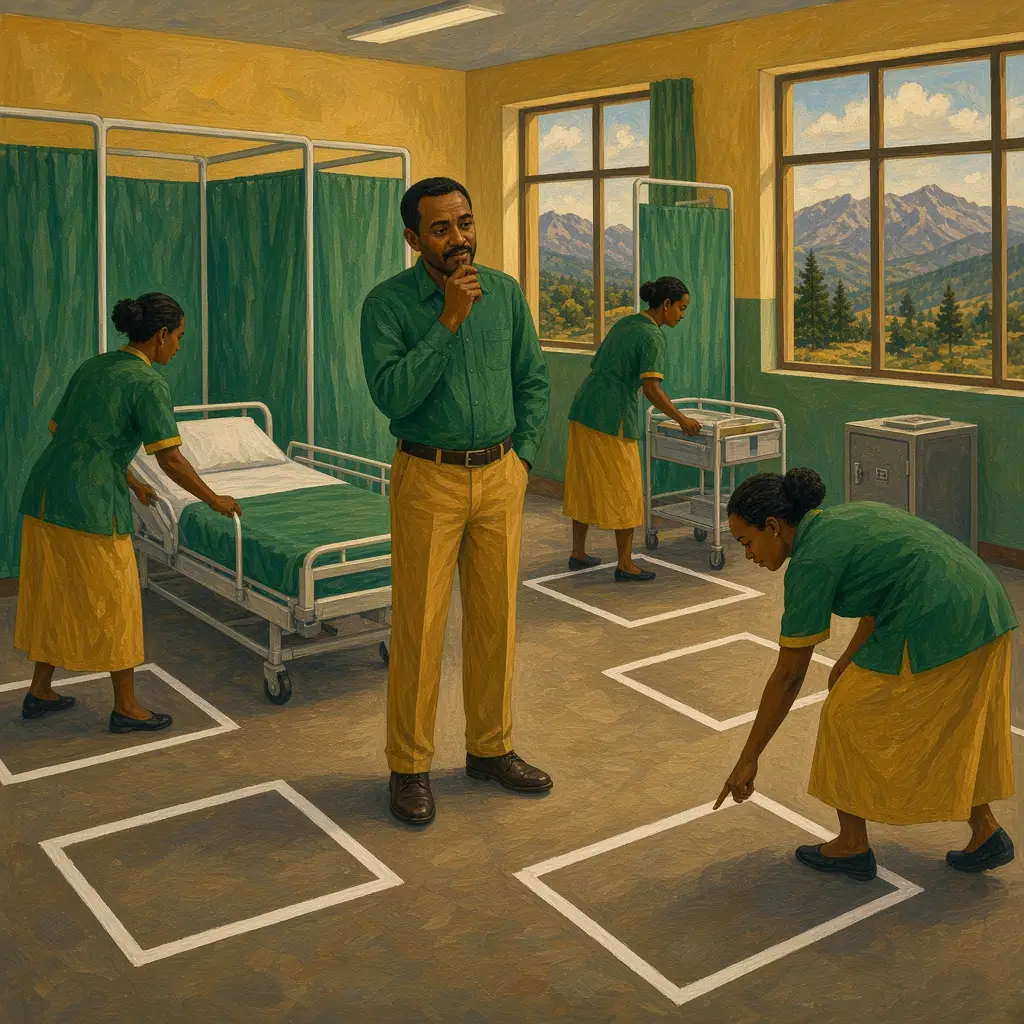
Bisrat manages the building of a new maternity wing for a hospital in Hawassa, Ethiopia. A board member, keen to show progress, wants digging to start next week, while the midwives are still arguing over the layout of the delivery rooms.
Bisrat lists what will be costly to change once concrete is poured: the drains, the oxygen and suction pipes inside the walls, the columns, and the fire escapes the inspectors must approve. Those, he says, must be designed in full and signed off before anyone digs. The rest can wait: furniture, shelving, the colour of the signs, the place of the nurses' desk. He has one delivery room mocked up in an empty ward, and the midwives spend a fortnight moving its beds and trolleys about. Digging starts a month later than the board member hoped.
Try this today List three parts of something you are planning that would be costly to change once started. Settle those first.
Cite or share this lesson
A plain reference you can paste into notes or an essay:
Quest2Plan. “When a Full Plan First Fits.” https://quest2plan.com/learn/lesson/when-a-full-plan-fits. Accessed 29 November 2026.
Sources
- Akashi Kaikyō Bridge (Wikipedia) — Construction from 1988, its design loads, its span, and the 1995 earthquake that moved its towers.
- Barry Boehm (Wikipedia) — The software engineer's life and books, including Balancing Agility and Discipline with Richard Turner.
- M. Visvesvaraya — The Indian engineer, his floodgates, dams and flood works.