
Lesson · 6 min Steady
What Happened at Hawthorne
In one line The Hawthorne studies became a story that attention raises output; the evidence behind that story is much thinner.
Between 1924 and 1932 the Western Electric company ran a long series of studies at its Hawthorne Works in Cicero, Illinois, just outside Chicago, where it made telephone equipment. The first tests, from 1924 to 1927, changed the lighting to see whether brighter light raised output. Output rose in the test rooms, but it also rose in the comparison rooms where the light stayed the same, and fell only when the light was dimmed almost to moonlight. Something other than lighting was at work.
From 1927 six women assembling telephone relays worked in a separate room while the researchers varied their rest breaks, hours and pay, counting every relay they finished. Output rose over the years, almost whatever was changed. Elton Mayo, an Australian-born professor at Harvard Business School, joined with Fritz Roethlisberger of Harvard and William Dickson of Western Electric. They added a huge interview programme and a study of men wiring telephone equipment, who quietly agreed among themselves how much each would produce.
Mayo turned these results into a story. Workers, he argued, are moved less by pay or lighting than by feelings and by belonging to a group; output in the relay room rose because someone was paying attention and the women had become a team. His book The Human Problems of an Industrial Civilization (1933) and Roethlisberger and Dickson's Management and the Worker (1939) made Hawthorne the founding tale of the human relations movement, and the idea that being studied changes behaviour became known as the Hawthorne effect.
The story is tidier than the evidence. The relay room changed many things at once, pay among them, and two of the six women were replaced part-way through. What survives is a more modest lesson: people notice how they are treated, groups set their own norms, and a study that changes many things at once cannot say which one mattered.
The lamps on line three
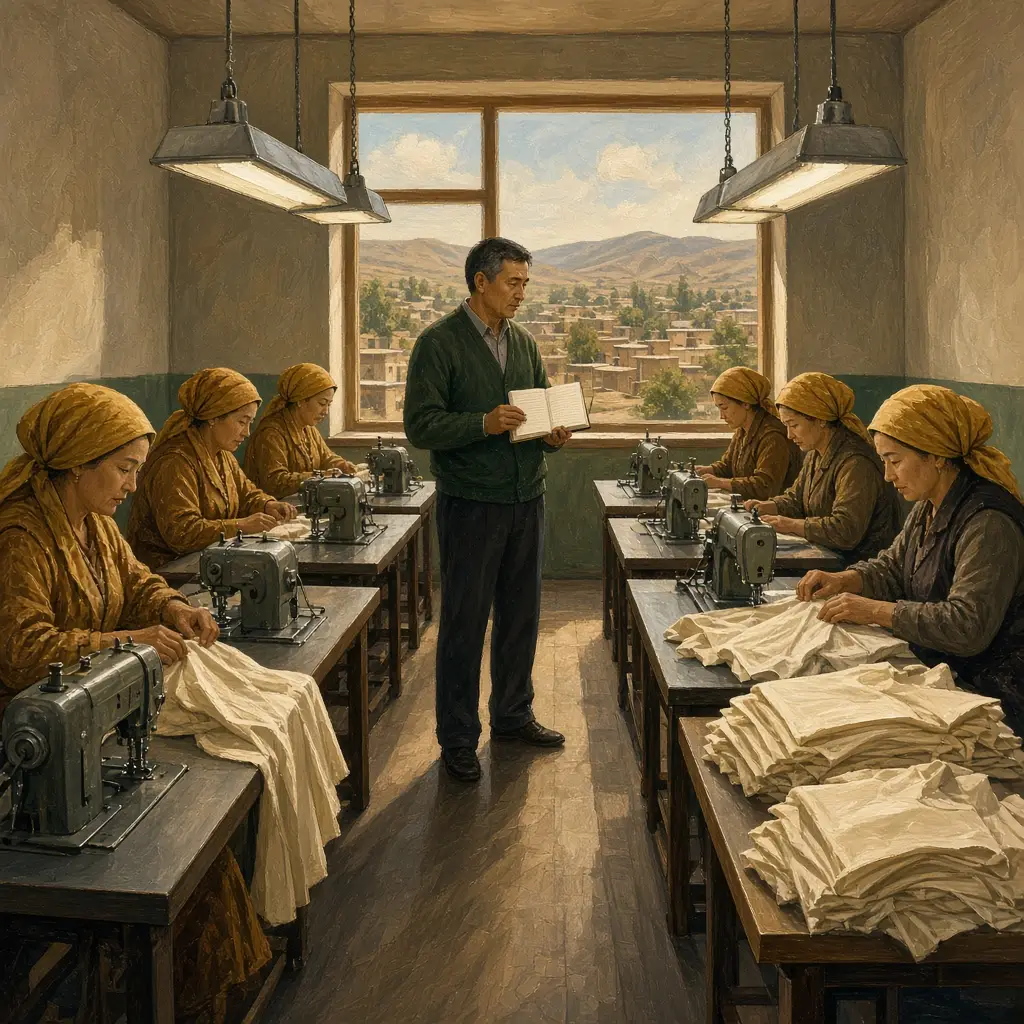
Kurmanbek runs the sewing floor of a garment factory in Osh, Kyrgyzstan. In spring the owners fitted new lamps over one line of twelve machines, and a team from the regional development office came to time that line twice a week. Within a month it was finishing a fifth more shirts a day. The owners asked Kurmanbek to price new lamps for the whole floor.
Before he did, he listed what else had changed on that line. The visitors were there, and the workers knew their figures were being written down. The line had also been given the newest machines, and its two slowest sewers had moved to packing. Kurmanbek fitted lamps on a second line with nothing else changed and no visitors, and counted for six weeks. Output rose a little in the first week and then settled back. The lamps were pleasant to work under, but they were not why the first line had sped up.
Try this today Think of a change at work that seemed to help. List everything else that changed at the same time, and ask which one you could test on its own.
Cite or share this lesson
A plain reference you can paste into notes or an essay:
Quest2Plan. “What Happened at Hawthorne.” https://quest2plan.com/learn/lesson/what-happened-at-hawthorne. Accessed 29 November 2026.
Sources
- Hawthorne effect — The studies' phases and dates, and later reanalyses of the data.
- Elton Mayo — Mayo's career, his reading of Hawthorne and its critics.
- The Human Relations Movement: Harvard Business School and the Hawthorne Experiments — Baker Library's exhibition on the studies and the people behind them.