
Lesson · 6 min Stretch
The Surgeon Who Had Been a Patient
In one line A skill can be handed over one small step at a time, each step given when the learner has shown she is ready for it.
In 1962 a teenage girl was carried on a stretcher out of her village in the Ethiopian highlands, then taken by bus to Addis Ababa. Mamitu Gashe had laboured for days without skilled help. Her baby was stillborn, and the birth left her with an obstetric fistula, an injury that leaves a woman incontinent and often shunned. At the Princess Tsehai Hospital two doctors, Catherine Hamlin from Australia and her husband Reginald from New Zealand, repaired it over many operations. She had never been to school.
Her recovery was slow, and she stayed on. She helped on the wards and, as her English improved, interpreted between patients and doctors. The Hamlins noticed. Reginald invited her into the operating theatre, first to watch, then to cut sutures and swab, then to place stitches herself. When the couple opened their own fistula hospital in Addis Ababa in 1974, she moved with them. For years she assisted, and sometimes finished an operation when they were called away. Only after that long apprenticeship did they ask her to carry out a repair on her own.
She became one of the most experienced fistula surgeons in the world, and later the main teacher of visiting doctors learning the operation. Earlier in the course, How Much to Hand Over showed decisions being handed over by degrees. The Hamlins did the same with a skill: each step was small enough to watch, and the next came when she had shown she was ready, not when a timetable said so.
Whether people without formal medical training should operate is still argued over. Supporters point to the many patients helped where surgeons are scarce; critics point to the risks when supervision is thin. The Hamlins' answer was close watching over many years: slow, and dependent on teachers who stay.
From the pressing table to the cutting table
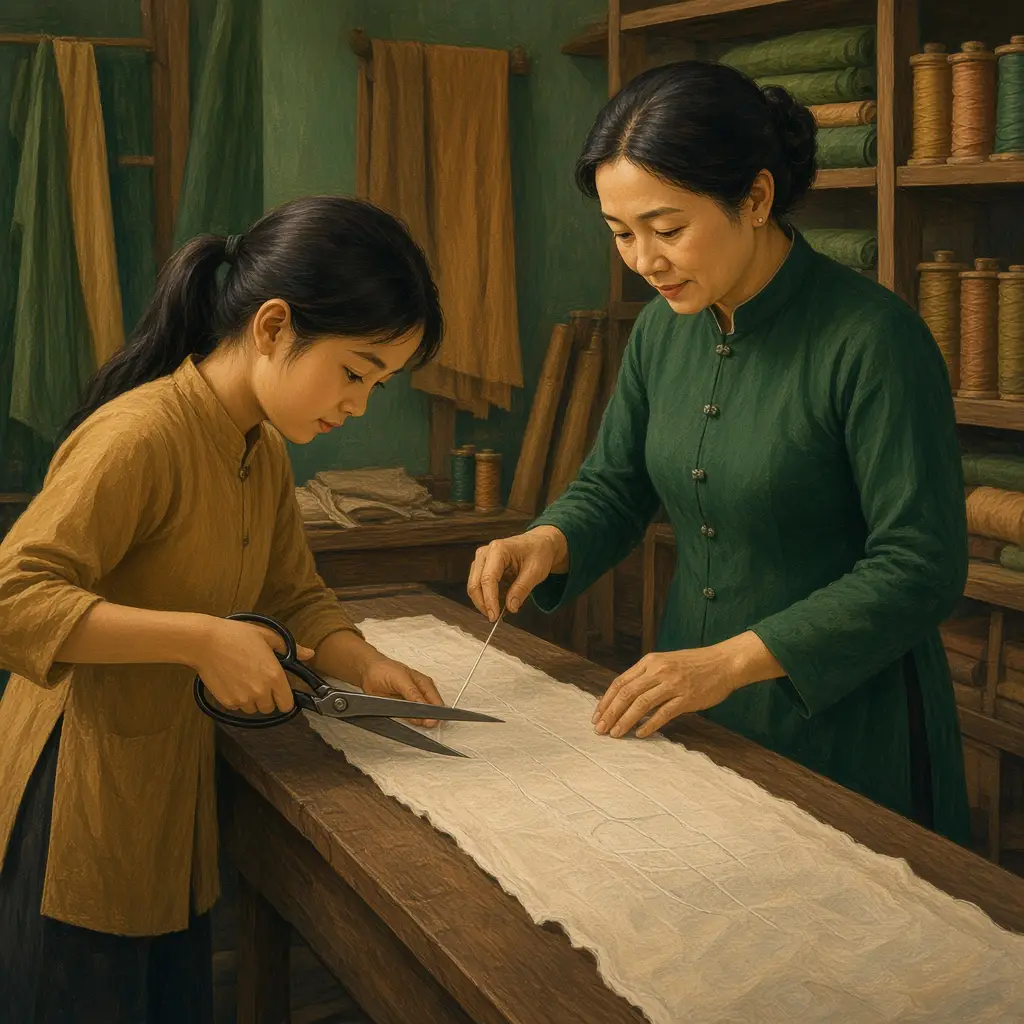
Thoa runs a tailoring workshop in Hoi An, Vietnam, making clothes to order for visitors. A school leaver who had come in to have a dress altered asked if she could help out, and Thoa put her on pressing finished garments. The girl was careful, and she asked why each seam was pressed the way it was. After a month Thoa let her sew hems, checking each one before it went to a customer.
The steps came one at a time. Hems first, then buttonholes, then whole shirts from pieces Thoa had cut. Cutting cloth was the step Thoa held back longest, since a wrong cut wastes a customer's fabric. For weeks the girl cut cheap cotton beside her, and Thoa marked every line before the scissors went in. When the girl began to spot Thoa's own small errors, Thoa let her cut a full order alone, and looked only at the finished pieces.
Try this today Think of someone learning a task from you. Name the next small step they could take on, and say what you would want to see first.
Cite or share this lesson
A plain reference you can paste into notes or an essay:
Quest2Plan. “The Surgeon Who Had Been a Patient.” https://quest2plan.com/learn/lesson/the-surgeon-who-had-been-a-patient. Accessed 29 November 2026.
Sources
- Mamitu Gashe — Her arrival as a patient, how she learned surgery step by step, and her work teaching fistula surgeons.
- Catherine Hamlin — The Australian obstetrician, her husband Reginald, and the Addis Ababa Fistula Hospital they founded.
- Catherine Hamlin (Right Livelihood) — The Hamlins' work in Ethiopia, the fistula hospital and the midwifery college.