
Lesson · 6 min Steady
The Great Church in Five Years
In one line Hagia Sophia rose in under six years under two mathematicians; about twenty years later part of its dome fell.
In January 532, riots in Constantinople ended with the city's great church burnt to the ground. Within weeks, on 23 February, the emperor Justinian had work begun on a replacement far larger than anything built before. It was dedicated on 27 December 537, five years and ten months later.
The designers were not career builders. Anthemius of Tralles was a geometer who wrote on burning mirrors and the geometry of curves; Isidore of Miletus taught geometry and physics and compiled the works of Archimedes. More than ten thousand people were employed, and marble came from across the Mediterranean, paid for by the imperial treasury. Their plan set a great dome over the centre of the church, a bold design built at speed.
It did not stay whole. Earthquakes in 553 and 557 cracked the dome, and in May 558 parts of it and its supports fell. Isidore the Younger, nephew of the first Isidore, rebuilt it with ribs, lighter materials and a higher profile, and the church was dedicated again in 562. The church, repaired many times since, still stands.
Did haste play a part? The sources do not let us say. The city lies in an earthquake zone, and the damage followed real shocks. But fast work leaves less time to test, to let masonry settle and to learn from early warning signs, and a bold design built fast has less margin when the unexpected comes. Earlier in the course, Fast, Cheap, Good: Pick Two? showed that buying speed can backfire. Here speed delivered a building that has stood, with repairs, for nearly fifteen centuries. Both halves of that story are true.
Go deeper
Hagia Sophia had a later builder too. In the early 1570s, under Sultan Selim II, the Ottoman chief architect Mimar Sinan, by then in his eighties, strengthened its walls with heavy buttresses, and the dome still stands. In his own great mosques, above all the Selimiye in Edirne, he set out to rival its dome, and he claimed in his memoir to have surpassed it, though measurement does not bear the claim out.
Ten weeks and the curing time
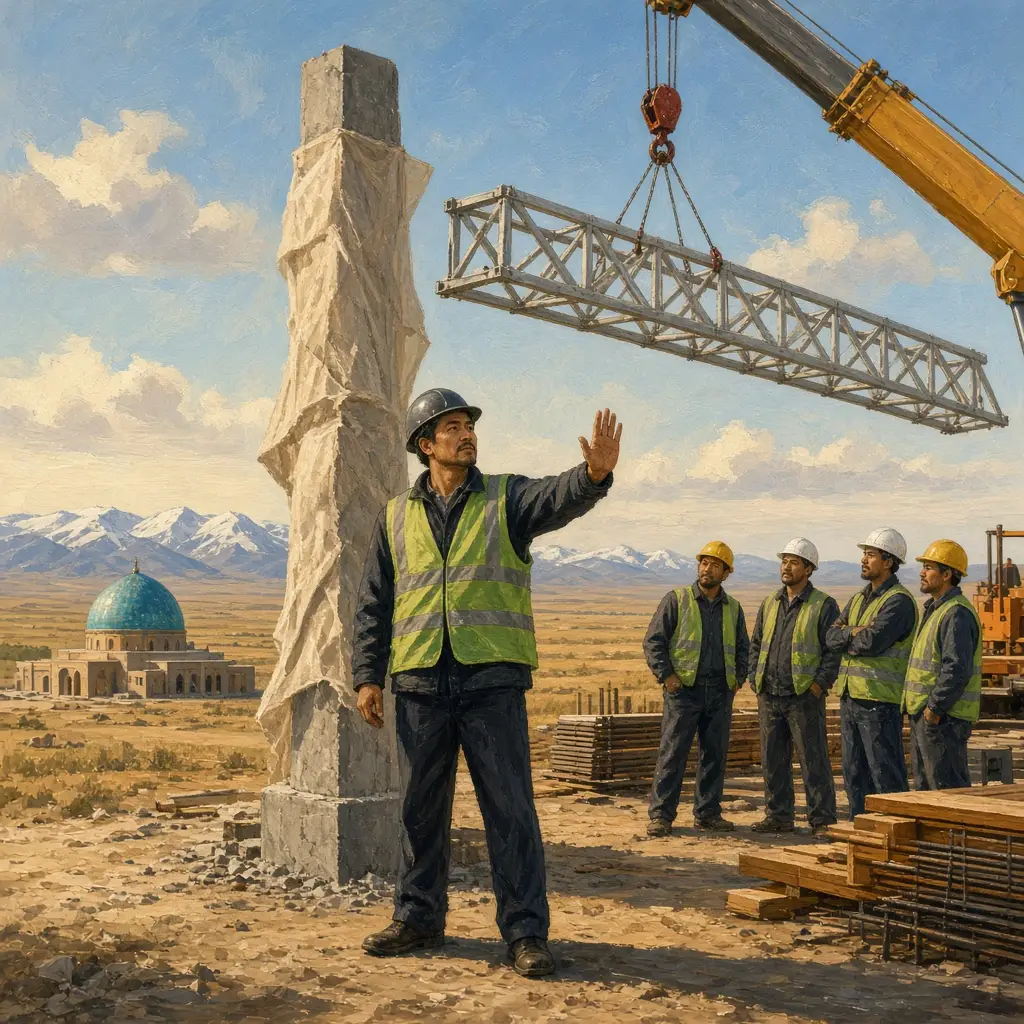
Berik's firm must rebuild a school sports hall in Turkistan, Kazakhstan, after a fire, and the regional office wants it ready in ten weeks, before the new school year. The region has earthquakes, and the hall will hold hundreds of children.
Berik listed every step and asked of each one what speed would cost. Extra crews could fit the floor and paint the walls faster at little risk. Roof trusses made in a factory would save two weeks and probably be better made than ones built on site. But the concrete in the foundations and frame needed its full curing time before the roof went on, and the engineer's inspections could not be skipped. He kept those fixed and bought time everywhere else. The hall opened a week after term began. The regional office grumbled; Berik showed them the list of what he had refused to squeeze, and why.
Try this today Find one deadline you are pushing hard. Name the check or waiting time it squeezes, and decide whether that squeeze is worth it.
Cite or share this lesson
A plain reference you can paste into notes or an essay:
Quest2Plan. “The Great Church in Five Years.” https://quest2plan.com/learn/lesson/the-great-church-in-five-years. Accessed 29 November 2026.
Sources
- Hagia Sophia — The church's rebuilding from 532 to 537, the workforce, the earthquakes and the dome rebuilt by 562.
- Isidore of Miletus — The mathematician who co-designed the church, and the partial collapse of its dome in 558.
- Anthemius of Tralles — The geometer who co-designed the church and wrote on burning mirrors.