
Lesson · 6 min Stretch
Duty to the People You Touch
In one line A project answers to its sponsor, but it owes something to everyone it touches, including those who never asked for it.
A sponsor pays for a project, but the project touches many more people: the neighbours who hear it, the workers who build it, those who will live with it for decades, and the land and water it changes. Earlier in the course, The People Not in the Room showed how easily such people go unasked. This lesson asks what a project owes them.
The Kariba Dam on the Zambezi River, built between 1955 and 1959 on the border of what are now Zambia and Zimbabwe, was built to power the region's towns and mines. Its lake also forced about 57,000 Tonga people from their homes along the river. Years later the anthropologist Thayer Scudder wrote that most of them remained 'development refugees'. The dam did what its sponsors wanted; the people it moved paid much of the price.
Partly in answer to such histories, the United Nations Declaration on the Rights of Indigenous Peoples, adopted by the General Assembly in 2007, set out free, prior and informed consent for projects on indigenous land. Free means without pressure or bribes, prior means before plans are fixed, and informed means given the plain facts in a language people understand. And consent is something a community may also withhold. An earlier treaty, International Labour Organization Convention 169 of 1989, had asked mainly for consultation, though it required consent before a people was moved from its land.
Duties conflict, and both sides argue seriously. Treating consent as a veto protects people who have usually had the least power, and it makes a project earn its welcome. Against that, a dam, road or power line may serve millions, and if any one group can block it, many others may lose out. A project lead rarely settles that question, but can do what both sides accept: map everyone the work affects, ask them early, tell them plainly what will change, and write down what was promised so it can be kept.
Go deeper
The 2007 vote on the declaration was 143 in favour and 4 against, with 11 abstentions. The four against were Australia, Canada, New Zealand and the United States, all of which later endorsed it. Their objections show the dispute in this lesson. Canada worried that the text seemed to require indigenous consent even on matters of general public policy, and the United States came to read consent as calling for meaningful consultation with tribal leaders rather than their agreement. Whether consent is a veto or a duty to consult in good faith is still argued.
Sadako Ogata, who led the UN refugee agency through the 1990s, acted on the view that a duty to people at risk could not wait for the rules to fit them, and stretched the agency's work to protect Kurds inside Iraq in 1991. Critics say the agency fell short under her in the Great Lakes region of Africa and in Bosnia, a reminder that such a duty is easier to state than to meet.
The pump by the lake
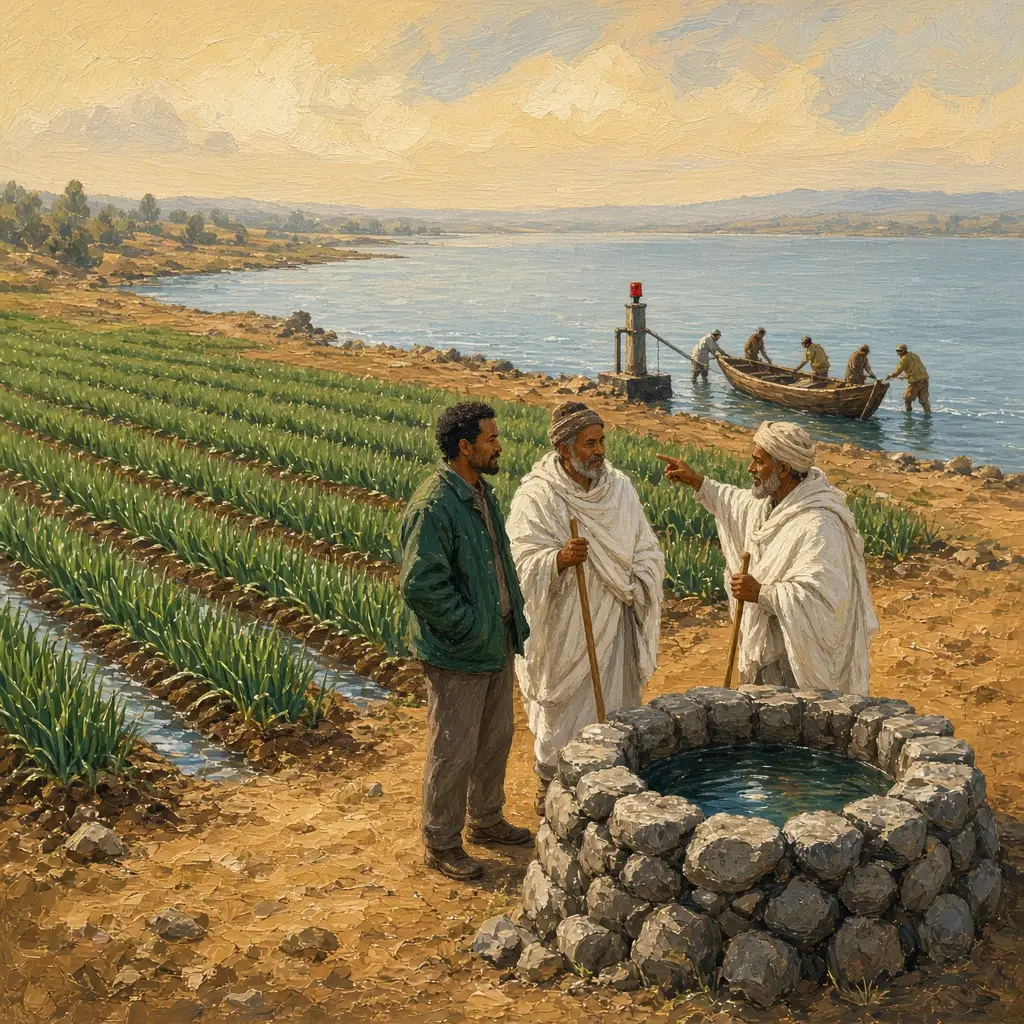
Tariku manages the expansion of a vegetable farm near Lake Ziway in Ethiopia. The investors want a second pump drawing from the lake and twice the area under crops by next season. Before ordering anything, Tariku walks the farm's boundary with two local elders. He hears that smallholders next door already worry about falling water in their wells, that spray from the farm drifts onto their onions when the wind turns, and that fishermen fear for the shallows where the pump would sit.
Tariku agrees with the elders that spraying will stop whenever the wind blows towards the houses, and that pump readings will be posted at the village office each month. He hires workers from the nearby village first. On the second pump he does not decide alone: he writes to the investors setting out the extra harvest it would bring, the risk to the neighbours' wells, and a smaller pump the elders would accept. The investors choose the smaller pump, grumbling about the lost yield.
Try this today List everyone your current project will affect who is not paying for it. Mark those who have been asked what they think.
Cite or share this lesson
A plain reference you can paste into notes or an essay:
Quest2Plan. “Duty to the People You Touch.” https://quest2plan.com/learn/lesson/duty-to-the-people-you-touch. Accessed 29 November 2026.
Sources
- Free, prior and informed consent — What each part of the principle means, where it comes from, and the dispute over whether it amounts to a veto.
- Kariba Dam — The dam's construction and the resettlement of about 57,000 Tonga people.
- Sadako Ogata — Her decade as UN High Commissioner for Refugees, including the protection of Kurds inside Iraq in 1991 and the criticism of the agency's record.